


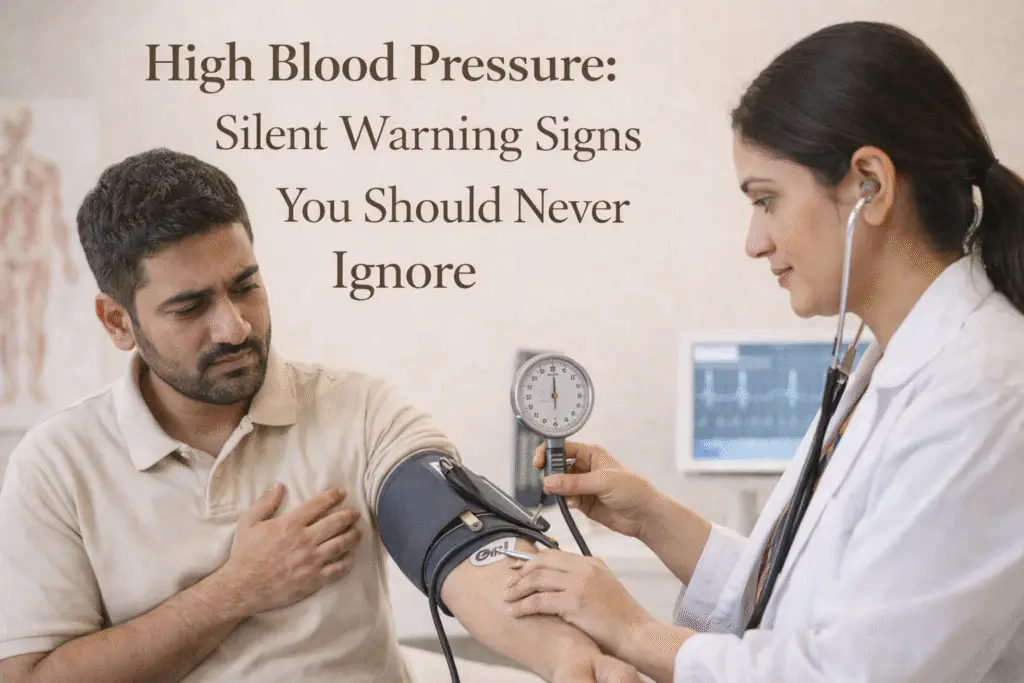
High Blood Pressure: Silent Warning Signs You Should Never Ignore
High blood pressure, also known as hypertension, is often called a “silent disease” because it may not show clear symptoms until serious damage has already occurred. Many people live with high blood pressure for years without knowing it, putting their heart, brain, and kidneys at risk.
At Pulse Hospital, Meerut, we regularly see patients who discover their blood pressure problem only after complications arise. This blog is meant to help you understand why early detection matters and when to seek medical care.
What Is High Blood Pressure?
Blood pressure is the force with which blood flows through your arteries. When this pressure remains consistently high, it puts extra strain on your heart and blood vessels.
Normal blood pressure is generally around 120/80 mmHg. Readings consistently above this level may require medical attention.
Why High Blood Pressure Is Dangerous
Uncontrolled blood pressure can lead to serious health problems such as:
- Heart attack
- Stroke
- Heart failure
- Kidney damage
- Vision problems
- Memory and concentration issues
Because damage happens slowly, many people underestimate the seriousness of the condition.
Common Warning Signs to Watch For
Although many patients feel no symptoms, some warning signs may include:
- Frequent headaches
- Dizziness or lightheadedness
- Shortness of breath
- Chest discomfort
- Blurred vision
- Fatigue
If you experience these symptoms, it is important to check your blood pressure and consult a doctor.
Who Is at Higher Risk?
You may be at higher risk of high blood pressure if you:
- Have a family history of hypertension
- Lead a sedentary lifestyle
- Consume excessive salt or processed foods
- Are overweight or obese
- Smoke or consume alcohol regularly
- Have diabetes or high cholesterol
Regular monitoring is especially important for individuals over 40 years of age.
Diagnosis and Monitoring at Pulse Hospital
At Pulse Hospital, blood pressure evaluation is simple, accurate, and reliable. Our cardiology team uses proper monitoring techniques and may recommend additional tests to assess heart health if needed.
Early diagnosis allows us to control blood pressure before complications develop.
Treatment and Lifestyle Management
Managing high blood pressure usually involves a combination of:
- Prescribed medications
- Dietary changes
- Reduced salt intake
- Regular physical activity
- Stress management
- Weight control
Our doctors focus on practical, sustainable changes that patients can realistically follow.
Importance of Regular Checkups
Even if you feel healthy, regular blood pressure checks are essential. Early detection can prevent long-term damage and reduce the risk of life-threatening events.
Routine heart health checkups at Pulse Hospital help patients stay informed and protected.
Final Thoughts
High blood pressure does not always announce itself with symptoms, but its impact can be severe if left untreated. Paying attention to regular checkups and early warning signs can protect your heart and overall health.
Pulse Hospital is committed to helping patients manage blood pressure with clarity, care, and medical expertise—so that small problems do not become serious ones
Leave a Reply